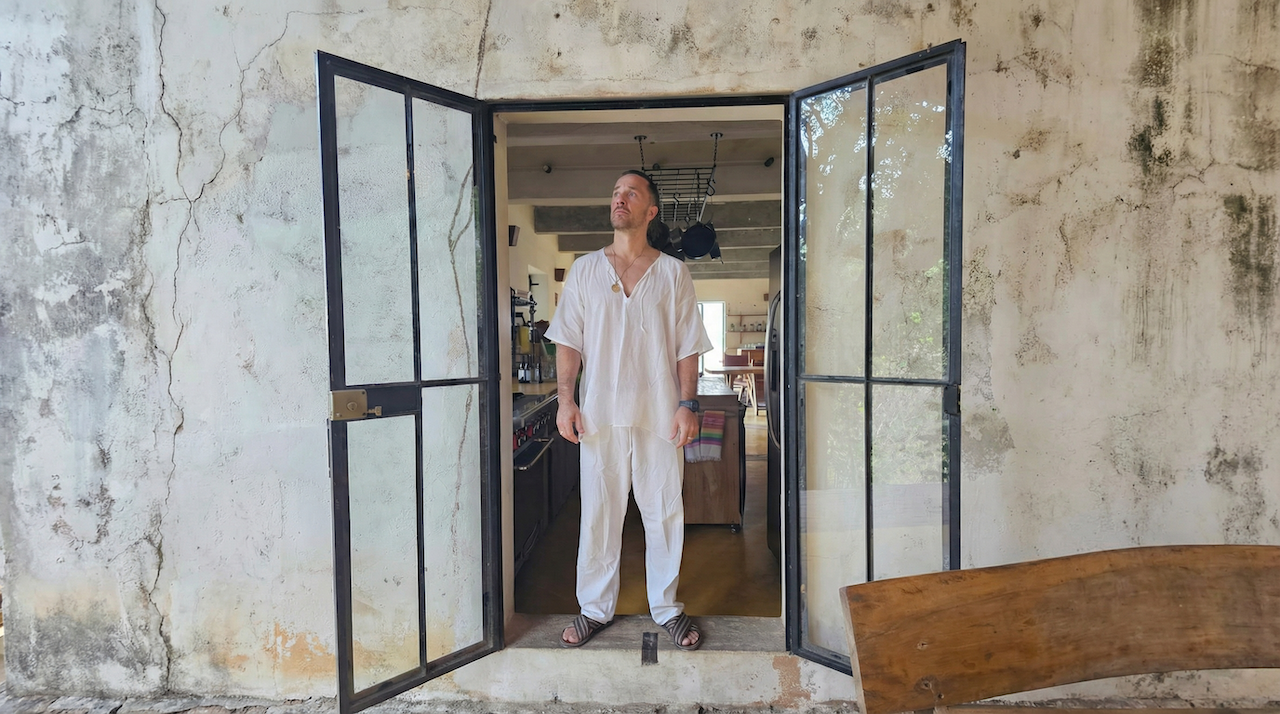
I later transitioned into construction and project delivery, moving from narrative assembly to physical execution. Working in design-build and project management introduced a different kind of discipline, with decisions enforced by materials, labor, regulation, and capital, and outcomes that cannot be revised once built.
Operating real businesses led me to study markets and capital allocation more seriously. Over time, the disconnect between financial abstraction and physical reality became difficult to ignore. During COVID, Bitcoin moved from an area of interest to a practical framework I began using in my own work. Its fixed constraints, verifiable rules, and long-term orientation aligned closely with the realities I had already encountered as an operator.
Bitcoin has since become a core part of how I think about business and systems. I speak publicly on the topic, work with organizations adopting Bitcoin-aligned practices, and structure parts of my own operations around it, not as ideology, but as infrastructure.
Earlier in life, I lived independently abroad as a teenager and later studied film in Cuba. Those experiences reinforced self-reliance and comfort operating outside conventional paths.
Today, I build and operate businesses internationally, assemble teams under pressure, and focus on long-horizon projects that prioritize durability, clear ownership, and accountability over speed or scale.
El Salvador is both an operational base and a place to live.
It offers a Bitcoin-forward regulatory environment, a climate well suited to long-term building, and an emerging community of people aligned around similar values.
The appeal is not convenience, but coherence between how work is done and how life is lived.
We are moving through a transition in how value is stored, measured, and coordinated.
Bitcoin sits at the center of that shift. It introduces fixed constraints into systems that have long relied on discretion, leverage, and narrative. Over time, this changes how decisions are made in capital allocation, incentives, and responsibility.
In practice, this favors work that can be verified, settled clearly, and judged by outcome rather than intention. It rewards durability over speed and long-term execution over short-term optimization.
My interest in Bitcoin comes from operating real businesses under real constraints. I speak publicly on the topic and work with organizations navigating this transition as it intersects with real-world operations.
Operating out of El Salvador, Proof is a design-led studio responsible for delivering physical projects from concept through construction.
Design, engineering, and execution are integrated within a single accountable system. Work is not handed off between vendors; delivery is owned end to end, with clarity of scope, cost, and outcome.
Projects are shaped by real constraints, climate, materials, labor, and long-term use, guiding decisions toward solutions that perform reliably under real conditions.
Bitcoin is used as settlement infrastructure, supporting direct coordination and accountability measured in finished work rather than projections.
EDDA designs and builds physical spaces across hospitality, commercial, and residential contexts, operating out of Victoria, Canada.
The work includes many of the defining hospitality spaces on Vancouver Island, hotels, breweries, restaurants, and public-facing projects that are in daily use rather than conceptual display.
Design and construction are treated as a single accountable process, aligned from concept through delivery. Decisions are made with attention to materials, sequencing, and long-term use, producing spaces that perform reliably over time.
Building biology is used as a lens for understanding how physical environments affect health and long-term performance.
It informs decisions around light, materials, air, and electromagnetic exposure where those factors materially improve outcomes. Application is selective and grounded in context, not ideology.
Rather than being treated as a standalone service, building biology is integrated alongside structural, climatic, and operational constraints when it strengthens the system as a whole.
Over time, this work intersects with a broader interest in decentralized health and environments designed to support human performance under real-world conditions.
Valuing family reinforces a bias toward long-term responsibility and decisions that must hold up over time.
It shapes how risk is assessed, how tradeoffs are weighed, and how commitments are made, favoring continuity, durability, and follow-through over short-term gain. Work is approached with the understanding that outcomes extend beyond the present moment and carry real consequences.
Select inquiries related to long-term projects, speaking, or aligned collaborations are considered.
